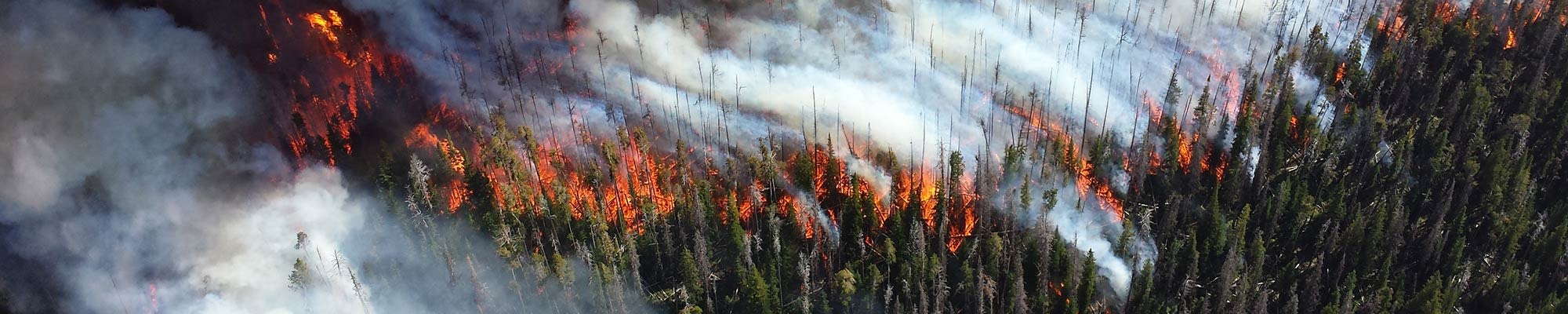
How We Can Help You
Campbell Scientific's Quick Fire Remote Automated Fire Weather Station (RAWS) offering, only available from our Campbell Scientific Canada regional office, is specifically for fire weather. Our quick-deploy RAWS can be set up and transmitting data over remote communications such as cellular and satellite in as little as 10 minutes, without tools. The preprogrammed stations provide standard RAWS data and comply with the National Fire Danger Rating System (NFDRS) standard.
Learn moreTo see how our systems meet your application needs, review our case studies. »


Products
There are no active products in this category. See retired products below.
Customize a System
In addition to our standard systems available, many of the systems we provide are customized. Tell us what you need, and we’ll help you configure a system that meets your exact needs.
Related Product Categories
More Details about Our Fire Weather Stations Systems
Our fire weather stations are built to deliver reliable data to support critical fire weather forecasting, early detection and response, and fire weather research. We provide a range of systems and sensors designed specifically for fire weather applications.
With decades of experience in environmental monitoring and data-acquisition system design, we offer both turn-key and fully customizable fire weather station solutions:
- Quick Fire* turn-key stations allow for fast deployment and rapid access to high-quality.
- Customizable stations give you the flexibility to choose the exact sensors, communications, and configuration your application requires.
Whether you need to deploy quickly or tailor a system to precise specifications, our solutions ensure you get the dependable fire weather data you rely on.
Sensors Used in Fire Weather Stations
Our fire weather stations are equipped with a suite of high-quality meteorological sensors for monitoring wind speed, wind direction, precipitation, air temperature, relative humidity, rainfall, and more. Sensors to measure fuel moisture, fuel temperature, soil water content, soil temperature, and solar radiation can also be added to a custom fire weather station. Campbell Scientific data loggers can interface with many sensors with different output types, and they can measure large numbers of sensors.
We offer a variety of products that can be used to create systems for fire weather stations. Many of the major components used to create these systems are listed below. Please let us know if we can help you configure a system.
- Quick Fire Remote Automated Fire Weather Station*
- ClimaVue™50 G2 Compact, Digital, SDI-12 Weather Sensor
- CS650 30 cm Soil Moisture and Temperature Sensor
- CS506 Fuel Moisture Sensor
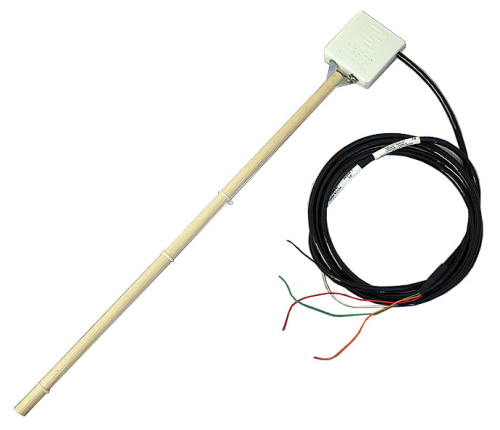
- CS205 10-Hour Fuel Temperature Stick (without sensor)
- CS320 Digital Thermopile Pyranometer
- 05103 Wind Monitor
- RainVue™10 SDI-12 Precipitation Sensor with Plastic Funnel
- QST6 6 ft Quick-Setup Tripod for Temporary Installations
Telemetry
Data can be transmitted over a variety of telecommunications options. The Quick Fire* system can be ordered to communicate over USB, cellular, Wi-Fi, and/or satellite. Custom systems can communicate over USB, cellular, Wi-Fi, satellite, or radio.
Quick Deployment Remote Automated Fire Weather Station
The Quick Fire Remote Automated Fire Weather Station (RAWS)* is engineered for rapid deployment. It is ideal for providing hyperlocal data on-site at prescribed burns, densifying weather coverage in high-risk regions, or supporting any temporary installation for fire operations where time is critical.
This system is designed for fire management teams who need speed and simplicity in the field. The entire system can be fully deployed by a single operator in under 30 minutes, with minimal tools or technical expertise required.
Based on the Canadian Forest Fire Danger Rating System (CFFDRS), the Quick Fire* comes pre-programmed to calculate and output key fire weather indicators, including:
- Fine Fuel Moisture Code (FFMC)
- Duff Moisture Code (DMC)
- Drought Code (DC)
- Initial Spread Index (ISI)
- Buildup Index (BUI)
- Fire Weather Index (FWI)
- Fire Danger Code (FDC)
Permanent Weather Stations
Campbell Scientific provides a wide selection of sensors and data transfer peripherals for configuring a custom station, allowing for greater flexibility to match your application’s exact requirements. Contact us to begin designing a system to meet your unique needs.
Data Loggers for Fire Weather Stations
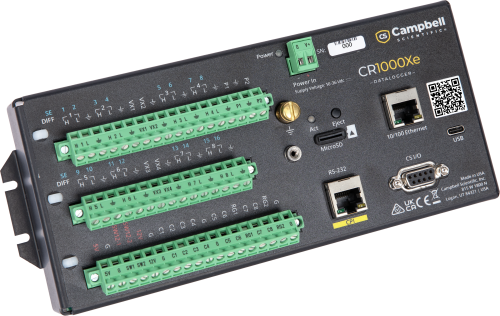
Our measurement systems are based around programmable data loggers that measure the sensors, then process, store, and transmit the data. We offer a family of rugged, reliable data loggers to choose from. Our data loggers have programmable execution intervals, wide operating temperature ranges, on-board instructions, and ample input channels for commonly used sensors. Our data loggers interface directly with most sensors, eliminating external signal conditioning. Many of our data loggers are available with built-in remote communications modules to simplify the data-acquisition setup.
When customizing data-acquisition systems for fire weather, data can be viewed and stored in the units of your choice (e.g., wind speed in m/s, mph, etc.). Measurement rates and data-recording intervals are independently programmable, allowing data tables to be output at any desired interval. Conditional outputs, such as rainfall intensity and wind gusts, can also be recorded. The program can be modified at any time to accommodate different sensor configurations or new data processing requirements. If needed, channel capacity can be expanded using multiplexers or other terminal expanders.
*Currently, Quick Fire is only available from our Campbell Scientific Canada regional office.
Case Studies

In remote environmental monitoring applications, reliable data transmission is critical. While traditional monitoring stations often......read more
Nearly 100 Campbell Scientific weather stations monitor meteorological parameters as part of New Zealand's fire......read more
Integrators and Consultants
Associated Links
Articles and Press Releases
Privacy Policy Update
We've updated our privacy policy. Learn More
Cookie Consent
Update your cookie preferences. Update Cookie Preferences