Aspen 10
Aspen 10
OrderableEdge Device for a Single Sensor
Pricing
Request a quote Have pricing access? Sign in
Configuration
- IoT w/Verizon SIM, -20 to +60CAspen10-US-STPart Number: 41859
- IoT w/Verizon SIM, -40 to +75CAspen10-US-XTPart Number: 41860
- IoT w/Worldwide SIM, -20 to +60CAspen10-CELL-STPart Number: 36339
- IoT w/Worldwide SIM -XT-40 to +75CAspen10-CELL-XTPart Number: 38256
Select a configuration to add to your quote
- Model:
- Aspen 10
- Item Number:
- Aspen10
Overview
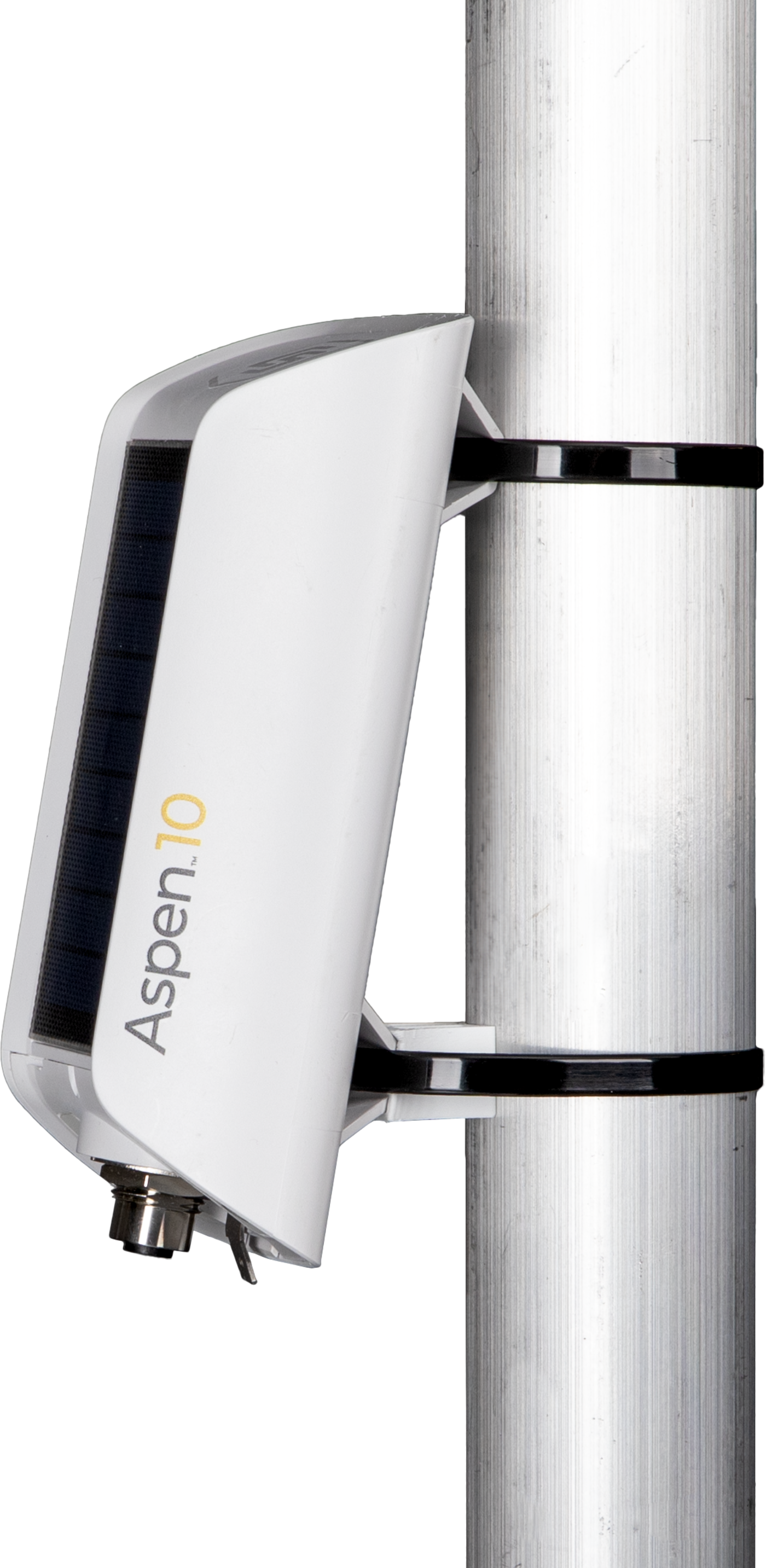
The revolutionary Aspen™10 Internet of Things (IoT) Edge Device allows users to easily connect their environmental sensor to the cloud. It is rugged and durable and may be mounted outdoors without the need for a second enclosure. It has an integrated solar panel and internal rechargeable battery, making the Aspen 10 a truly self-sustaining device.
The Aspen 10 is also small and compact, which makes it easy to install in a variety of locations without disturbing the environment it is monitoring. An integrated IoT cellular modem allows the Aspen 10 to transmit data to the cloud, and a global positioning system (GPS) receiver provides automated installation location.
Setting up the Aspen 10 to read your sensor is quick and easy thanks to a sensor interface technology that allows automatic identification of any sensor with an SDI-12 identification. The Aspen 10 publishes this ID to the cloud, in return receiving a customized measurement configuration and program for your specific sensor and application. You can then monitor your data from anywhere.
Key Advantages
Technical Description
The Aspen 10 is a multipurpose, compact, entry-level edge device with a simple plug-and-play interface. Supported sensors measure hydrological, meteorological, environmental, and industrial phenomena. The Aspen 10 is part of the IoT and makes sensor data accessible anywhere via the Aspen 10's compatibility with the MQTT protocol and its integration with CampbellCloud™. The Aspen 10 provides maintenance-free sensor power and automates cellular connectivity, data storage, and data forwarding to CampbellCloud, where users can both visualize their data and manage API access.
The Aspen 10 is similar to a full Campbell Scientific system and comprises a data logger, wiring terminals, enclosure, solar panel, charge regulator, battery, modem, and antenna—all in one small package.
Compatible sensors are cabled using an eight-pin M12 connector. A detect pin lets the Aspen 10 know that it has connected to a sensor with an SDI-12 capability of self-identification. After identifying the sensor, the Aspen 10 connects to CampbellCloud to retrieve the appropriate configuration and program for that sensor, which enable the edge device to power the sensor appropriately and make accurate analog or digital measurements.
A free app, CampbellGo, enables secure NFC/Bluetooth pairing between a phone and the Aspen 10. This greatly simplifies the installation process with real-time sensor readings, diagnostic tools, and data-to-cloud delivery information while you are on-site. This gives you confidence that everything is working from end to end before leaving the installation site.
All of this allows you to collect data from the selected sensor in the location you need from practically anywhere on the globe.
Benefits
- IoT device using local cellular networks as the low-power wide-area network (LPWAN)
- Cellular CAT M1 for worldwide roaming
- Geolocation to automatically determine the edge device's location
- Solar charging to keep the IoT device operational indefinitely using just a few hours of daily sunlight
- Internal rechargeable LiFePO4 battery with reserve power for more than one month's operation without charge for all supported sensors
- Smart sensor detection and identification
- Smart sensor power automatic optimization for the attached sensor
- Simple zip tie system for mounting to almost anything
- Water-resistant enclosure for installation in most environments
- On/off switch for simple operation
- Status LED for operation without a smartphone
- Near field communication (NFC)/Bluetooth for operation with a smartphone to allow on-site analysis through the CampbellGo™ app
- Optimal security using Message Queuing Telemetry Transport (MQTT) with Transport Layer Security (TLS) mutual authentication
Specifications
- Processor
- 32-bit arm cortex
(CPU)
- Memory
- 2 MB flash640 KB SRAM
- Program Execution Period
- 1 s to 1 day; 1 s increments
- Real-Time Clock Resolution
- ±1 s
- Real-Time Clock Accuracy
- Synchronized with CampbellCloud once per day
- Operating Temperature Range
- -20° to +60°C
(standard)
-40 to +75°C(extended)
Outdoor environment - Maximum Scan Rate
- 1 s
- Communications Protocols
- SDI-12, HTTP(S), MQTT
- Case Material
- High-impact-resistant and UV-resistant ASA, recycle code 7IP65 water-resistant rated, Gore-Tex breathability
- Digital I/O
- Terminals configured for SDI-12
- Certifications
- CB Certificate Number NO127343
- Dimensions
- 16.2 x 8.0 x 5.8 cm
(6.4 x 3.2 x 2.3 in.)
- Weight
- 395 g
(0.9 lb) for -ST option
352 g(0.8 lb) for -XT option
Power
- Battery
- Note: Charge and discharge characteristics are controlled internally according to battery type.
- Battery for -20° to +60°C (-ST) Option
- 3.2 Vdc, 7.2 Ah, Li-Po PHD26650
- Battery for -40° to +75°C (-XT) Option
- 3.65 Vdc, 5.6 Ah, Li-ion Saft MP176065 xtd
- Average Current Drain
- <0.35 uA
(deep sleep)
<1 mA(idle)
10 uA (ultra-low power)for 5 Vdc sensor power supply
5 mAfor 5 Vdc sensor power supply
14.3 mAfor 8 Vdc sensor power supply
30 mAfor 12 Vdc sensor power supply
Power Output
- -NOTE-
- Regulated 5, 8, or 12 Vdc
(disabled when battery capacity <0.5 Ah)
- 5 Vdc Current Limit
- 30 mA
(ultra-low power)
210 mA - 8 Vdc Current Limit
- 210 mA
- 12 Vdc Current Limit
- 210 mA
Communications
- Protocols
- SDI-12
- Internet Protocols
- HTTP(S), MQTT
- Near Field Communication (NFC)
- Target device compatible with CampbellGo
- Bluetooth Low Energy (BLE)
- Compatible with CampbellGoMaximum distance of 50 m
(165 ft)
- SDI-12
- One SDI-12-compliant terminal meets SDI-12 Standard v 1.4.
Accessories
(5)40636
12-Month, Prepaid, Single-Channel IoT Subscription
Orderable40642
24-Month, Prepaid, Single-Channel IoT Subscription
Orderable40648
36-Month, Prepaid, Single-Channel IoT Subscription
Orderable42336
45-Degree Angle Bracket Kit for Aspen 10
OrderableA151
Single Sensor Terminal Case, Vented with Desiccant
Orderable

Common Accessories
(4)40636
12-Month, Prepaid, Single-Channel IoT Subscription
CampbellCloud accounts are free, and you can add as many users as you wish, but each asset added to your organization requires a subscription. Subscriptions are based on the amount and frequency of data the asset will produce. The 40636 is specific for the Aspen™10 Edge Device.
Orderable40642
24-Month, Prepaid, Single-Channel IoT Subscription
CampbellCloud accounts are free, and you can add as many users as you wish, but each asset added to your organization requires a subscription. Subscriptions are based on the amount and frequency of data the asset will produce. The 40642 is specific for the Aspen™10 Edge Device.
Orderable40648
36-Month, Prepaid, Single-Channel IoT Subscription
CampbellCloud accounts are free, and you can add as many users as you wish, but each asset added to your organization requires a subscription. Subscriptions are based on the amount and frequency of data the asset will produce. The 40648 is specific for the Aspen™10 Edge Device.
Orderable42336
45-Degree Angle Bracket Kit for Aspen 10
The 42336 mounting bracket accessory kit is used to mount the Aspen™10 Internet of Things (IoT) Edge Device at a 45-degree angle from vertical. This kit is especially helpful for those clients using the Aspen 10 at low latitudes to gain greater sun exposure and thus greater solar recharge.
Orderable
Replacement Parts
(2)28995
Blue, Fully Insulated, Quick-Disconnect Socket-Lug Connector
The 28995 is an insulated push-on grounding lug that is included with the Aspen™10 Datalogger IoT Gateway for a Single Sensor. It is used for crimping to a 14 AWG grounding wire and connecting to the Aspen 10 ground spade. The other end of the grounding wire is connected to earth ground, providing a secure ground connection for good analog measurements and surge protection.
Orderable39572
UV-Resistant 18 in. Cable Ties (quantity of 10)
The 39572 includes 10 of the 45.7 cm (18.1 in.) black, UV-resistant cable ties (pn 39333). These cable ties are often used with tripods and towers, and this 10-unit pack can be purchased as a replacement item. A connection is made by pulling the tapered end through the locking end, thus forming a loop. The free end is pulled tight to secure the cable tie, then trimmed back to the locking end. Once attached, the cable tie must be cut to be removed.
Orderable

Ships With
(4)- Shipping Box
- Aspen 10 45-Degree Angle Bracket
28995
Blue, Fully Insulated, Quick-Disconnect Socket-Lug Connector
Orderable- 10° Tilt Spacer
Compatibility
The Aspen 10 is only compatible with CampbellCloud. It is not compatible with LoggerNet or any of its derivatives. To access CampbellCloud, please visit our CampbellCloud hosted site.
This edge device is compatible with sensors that support SDI-12 communications, respond to the identify command, and are wired using an M12 eight-pin connector code A as specified by Campbell Scientific.
Please note that the Aspen 10 will not power sensors with heaters, and it does not allow high-frequency data collection.
Compatible Products
(12)HygroVue 10
Digital Temperature and Relative Humidity Sensor with M12 Connector
OrderableNotesAQ conversion cable required
ClimaVue 50 G2
Compact, Digital, SDI-12 Weather Sensor
OrderableNotesAQ conversion cable required
RainVue 10
SDI-12 Precipitation Sensor with Plastic Funnel
OrderableNotesAQ conversion cable required
RainVue 20
SDI-12 Precipitation Sensor with Aluminum Funnel
OrderableNotesAQ conversion cable required
SoilVue 10
TDR Soil Moisture and Temperature Profile Sensor
OrderableNotesAQ conversion cable required
Wintersense SDI-12
Non-Invasive Surface Temperature Sensor
OrderableNotesNo additional cable required
TempVue 20
Pt100 Digital Air Temperature Sensor
OrderableNotesNo additional cable required
CS451
Stainless-Steel Pressure Transducer
OrderableNotesA151 termination box required
CS456
Titanium Pressure Transducer
OrderableNotesA151 termination box required
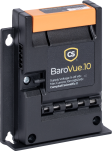
BaroVue 10
Digital Barometer
OrderableNotesAQ sensor pigtail cable required
RangeVue 15
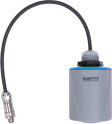
SDI-12, Radar Water-Level Sensor
OrderableNotes—RangeVue 30
SDI-12, Radar Water-Level Sensor
OrderableNotes—


Incompatible Products
(5)LoggerNet
Data Logger Support Software
OrderableNotes—LoggerNet Admin
Admin Datalogger Support Software (Server and Clients)
OrderableNotes—LoggerNet Mobile Connect
Apps for iOS and Android
OrderableNotes—LoggerNet Remote
Remote Datalogger Support Software
OrderableNotes—PC400
Datalogger Support Software
OrderableNotes—
Related Resources
Documents
- Brochure
Aspen 10 Edge Device for a Single Sensor
April 2026
View Document - Compliance
Aspen 10 Australia Supplier Declaration of Conformity
December 2023
View Document - Document
Aspen 10 Cellular Map
September 2023
View Document - Compliance
Aspen 10 UK Declaration of Conformity
December 2023
View Document
Showing 4 of 14 results
See all DocumentsVideos and Tutorials

Changing the Default Organization Settings in CampbellCloud
January 10, 2024 (1:40)
Modify the default organization settings to meet the needs of the organization.
Watch
Creating a CampbellCloud Organization Account
January 10, 2024 (2:28)
Set up a new organization account in CampbellCloud
Watch
Adding a New User to an Organizational Account in CampbellCloud
January 10, 2024 (2:44)
Adding a New User to an Organizational Account in CampbellCloud
Watch
Adding a New Security Group to an Organizational Account in CampbellCloud
January 10, 2024 (2:01)
Adding a New Security Group to an Organizational Account in CampbellCloud
Watch
Showing 4 of 31 results
See all Videos and Tutorials