CR9000X

CR9000X
RetiredMeasurement and Control Datalogger
No longer available to order
This product is retained for service, documentation, and compatibility information.
Replaced by
- Granite 9
High-Capacity, High-Speed Data Acquisition System
- Granite 10
Measurement and Control Data Acquisition System
- Model:
- CR9000X
- Item Number:
- 16689
- Warranty:
- 3 years
Overview
The CR9000X is a large, modular multiprocessor system that provides precision measurement capabilities in a rugged, battery-operated package. It consists of a base system and a chassis with slots for up to nine user-selected I/O modules. The CR9000X is our fastest data logger, with a measurement rate of 100,000 Hz, making it ideal for rapid sampling applications.
For the entire list of available I/O modules for the CR9000X and CR9000XC, visit the Other Accessories section of the Ordering Info page for the CR9000X and the CR9000XC.
Campbell Scientific also offers the CR9000XC, a compact version, that accepts up to five I/O modules. For more information, visit the CR9000XC Product Info page.
Key Advantages
Customizable, ideal for demanding research applications
Technical Description
The CR9000X's base system includes a CR9032 CPU module, CR9041 A/D module, CR9011 power supply module, and 128-MB SDRAM memory for program and data storage. The CR9000X's internal battery has a 14-Ahr capacity.
A mix of I/O modules is selected based on the measurements required for the application. Campbell Scientific offers a large variety of modules. Individual I/O modules can be swapped out, allowing the system to be reconfigured if requirements change.
I/O modules whose model numbers end in an E (e.g., CR9051E, CR9055E) and the CR9052DC include an easy connector module. Easy connector modules allow sensor wiring to remain connected while the input module’s measurement electronics and the rest of the data logger system are used elsewhere.
The CR9000X has a choice of enclosure. The environmental enclosure is designed for field applications, where the enclosure will be exposed to the elements. The lab enclosure is for applications where the CR9000X will reside inside a building.
CR9000X versus CR9000
In August 2004, the CR9000X replaced the CR9000. The CR9000 and CR9000X dataloggers differ in their CPU Module; the CR9000 datalogger uses the CR9031 and the CR9000X datalogger uses the CR9032.
The CR9032 CPU module supports a measurement rate of up to 100,000 Hz, provides a 180 MHz clock speed, and adds a built-in RS-232 port, 10baseT/100baseT port, CS I/O port, and PC-card slot. The built-in ports enable communication without using the special interfaces (e.g., PLA100, TL925, NL105) that were required for the retired CR9000 datalogger. The PC-card slot allows the CR9000X to store data on a Type I, Type II, or Type III PCMCIA card, or on a CompactFlash® card if an adapter is used.
A CR9000 may be upgraded to a CR9000X by replacing the CR9031 CPU module with the CR9032 CPU module.
Product Notes
Benefits
- Up to nine I/O modules can be used to configure a system for your specific application.
- Ideal for vehicle testing, structural or seismic monitoring, or other applications that require rapid sampling or a large number of high resolution channels
- Throughput of 100,000 measurements per second is ideal for high demand research, such as flux and complex structural monitoring.
- Contains an on-board 10baseT/100baseT port allowing direct Ethernet connection; an interface such as the NL100 is not required
- CR9052IEPE and CR9052DC modules provide powerful anti-aliasing and real-time FFT capabilities that are unique to the CR9000X-series dataloggers
- Integrated PCMCIA slot accepts memory cards up to 2 GB for stand-alone data collecting.
- Gas Discharge Tube (GDT) protected inputs
- Collects and stores data and controls peripherals as the brain of your system
Specifications
- -NOTE-
- Additional specifications are listed in the CR9000X(C) Specifications Sheet.For the CR9000X, the current drain, weights, and specific number of input/output channels depend on the I/O modules chosen.
- Operating Temperature Range
- -25° to +50°C
(standard)
-40° to +70°C(extended)
Non-condensing environment - Analog Inputs
- 28 single-ended or 14 differential per CR9050, CR9051E, or CR9055(E) module
- Pulse Counters
- 12 per CR9071 module
- Communications Ports
- CS I/ORS-23210baseT/100baseT
- Switched 12 Volt
- 1 terminal
- Digital I/O
- Certain digital ports can be used to count switch closures.1 SDM and 8 outputs per CR9060 module or 16 I/Os per CR9071 module
- Analog Voltage Accuracy
- ±(0.07% of reading + 4 A/D counts), -25° to +50°C
- ADC
- 16-bit
- Power Requirements
- 9.6 to 16 Vdc
- Communication Protocols
- SDM
- Warranty
- 3 years
- Dimensions
- 40.1 x 24.9 x 20.3 cm
(15.8 x 9.8 x 8 in.) for lab enclosure
45.7 x 34.9 x 22.9 cm(18 x 13.5 x 9 in.) for field enclosure
- Weight
- 13.6 kg
(30 lb) with modules in lab enclosure
19.1 kg(42 lb) with modules in field enclosure


Common Accessories
(4)RTDAQ
Real-Time Data Acquisition Software
At least one copy of RTDAQ is needed. RTDAQ is Campbell Scientific's data logger support software targeted for high-speed data acquisition applications. This versatile software supports a variety of telecommunication options, manual data collection, and extensive data display. RTDAQ includes easy-to-use program generators, as well as full-featured program editors. RTDAQ is available on our website.
Orderable28900
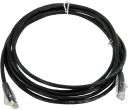
CAT5e Ethernet Unshielded Cable with RJ45 Connectors, 10 ft
This 10baseT Ethernet straight through cable can be used when the cable is run from a hub to the CR9000X. The 28900 has a 10 ft length.
Orderable28901
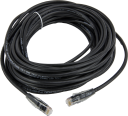
CAT5e Ethernet Unshielded Cable, RJ45 to RJ45, 50 ft
The 28901 is similar to the 28900 cable but has a 50 ft length. This cable is typically used when the distance between the hub and data logger is 10 to 50 ft.
Orderable13659
CAT5e Ethernet Unshielded Crossover Cable, 7 ft
This 10baseT Ethernet crossover cable is used if the cable is run directly from the computer to the CP9000X.
Limited availability
Replacement Parts
(5)8025
3 V 24 mm Coin Cell Lithium Battery
This battery powers the clock and RAM when the primary 12 Vdc power supply is not connected. The battery must be replaced when its voltage falls below 2.4 Vdc.
Orderable8223
CR9000(X) Blank Module
This "blank" (no circuit board or components) occupies one slot in the CR9000X chassis when the slot will be unoccupied by a functional I/O Module, thereby providing a degree of protection for modules in the adjacent slots.
Orderable8219
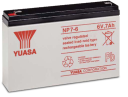
6 V 7 Ah Lead Acid Battery
The 8219 provides a 6 Vdc 7 Ah sealed rechargeable battery. This battery is included in the 8271 Sealed Battery Module for the CR9000(X)-series dataloggers. To provide 12 Vdc, two of these batteries are wired in series. For the CR9000X, four batteries are required. Customers can generally replace the batteries.
Orderable10873
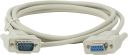
Serial Data Cable, 9-Pin Socket (Female) to 9-Pin Pin (Male)
The 10873 is a serial cable that is useful for connecting the RS-232 port of the data logger to the 9-pin RS-232 port of a computer. The cable is six feet long.
Orderable8125
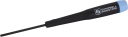
Flat-Bladed Screwdriver, 2.5 mm Blade x 50 mm Shaft
The 8125 is a small, flat-bladed screwdriver that is extremely useful for opening the guillotine terminals on our data loggers and measurement control devices.
Orderable


Services
(2)15851
CR9000(X)/CR9000(X)C Base System and Cards Extended Temperature Test (-40° to +70°C)
The 15851 provides extended temperature testing for a CR9000X datalogger that has previously passed extended temperature testing (-40° to +70°C). Testing also requires concurrent purchase of calibration. As individual components age, their ability to perform within specifications at temperature extremes diminishes. Therefore, Campbell Scientific can not guarantee that individual units that previously passed extended temperature testing will be capable of doing so at a later date.
Orderable16552
CR9000(X) or CR9000(X)C Base System Calibration with Data (-25° to +50°C)
The 16552 requires an RMA (Return Material Authorization) from Campbell Scientific. When ordered, the CR9000X is calibrated to meet original specifications. Calibration includes standard temperature testing (-25° to +50°C). Before and after calibration sheets are supplied with the data logger. The calibration price assumes return of a fully functional data logger; charges for all repairs will be added to the invoice.
Orderable
Compatibility
Compatibility with Retired Products
Customers can add CR9000X dataloggers to networks containing the older CR9000 or CR9000C dataloggers. I/O modules other than the CR9080 can be used with either the CR9000 or CR9000X. CR9000 communication interfaces (i.e., NL105, BLC100, TL925, PLA100) are not compatible with the CR9000X, and therefore have been retired.
Sensors
With several channel types, the CR9000X is compatible with many sensors, including thermocouples and 4 to 20 mA sensors.
Measurement and Control Peripherals
Measurement and control peripherals typically used with the CR9000X are our AM25T 25-Channel Solid State Multiplexer, SDM-CAN Interface, SDM-INT8 Eight Channel Interval Timer, and SDM-SIO4 Serial Input/Output Module. Other measurement and control peripherals are compatible but they do not support the CR9000X datalogger's maximum measurement rate and are therefore impractical for most CR9000X applications.
Communications
The CR9000X typically communicates with a PC via direct connect or Ethernet. Because the CR9000X has an on-board 10baseT/100baseT port, an Ethernet interface such as the NL201 is not required.
Storage capacity can be increased by using a PC or CompactFlash card. The CR9000X's PCMCIA card slot supports one Type I, Type II, or Type III PC Card or the CF1 adapter and one CompactFlash (CF) card.
The storage capacity of Type II cards exceeds 1 GB. Type III cards provide data storage capacities exceeding 1 GB but may not be suitable for all environments. Campbell Scientific offers several CF cards that have passed our ESD testing and operate properly with our data loggers (see Ordering tab). Please note that the PCMCIA and CompactFlash cards need to be industrial-grade and have a storage capacity of 2 GB or less.
Other communication peripherals are compatible but they do not support the CR9000X datalogger's maximum measurement rate and are therefore impractical for most CR9000X applications.
Enclosures
Two enclosures are offered for the CR9000X. The 8253 fiberglass environmental enclosure is designed for field applications where the enclosure will be exposed to the elements. The 8255 lab enclosure is for applications where the CR9000X will reside inside a building.
Software
CRBasic, the CR9000X's full programming language, supports simple or complex programming and many on-board data reduction processes. CRBasic is included in RTDAQ, LoggerNet, and PC400.
RTDAQ Real-Time Data Acquisition Software must be ordered separately; the CR9000X is also compatible with other Campbell Scientific software.
Compatible Products
(4)
Related Resources
Case Studies
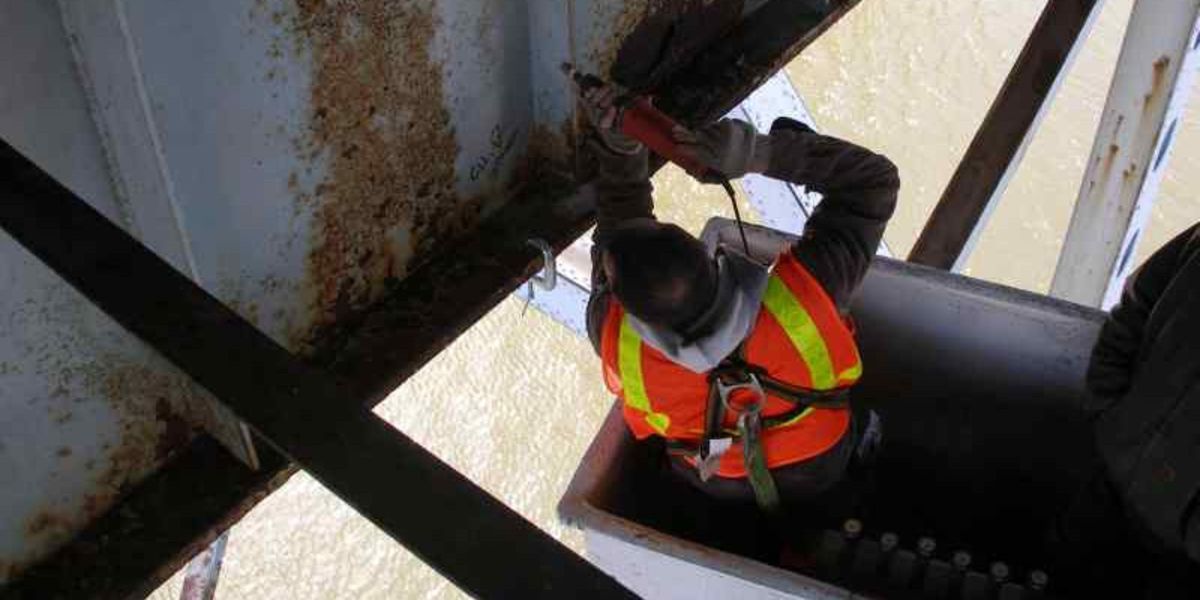
Pennsylvania: Assessing Bridge Fatigue Life
Field testing of steel bridge to assess fatigue life and provide data for rehabilitation
Pennsylvania, between Shippingport and Midland
April 6, 2011
View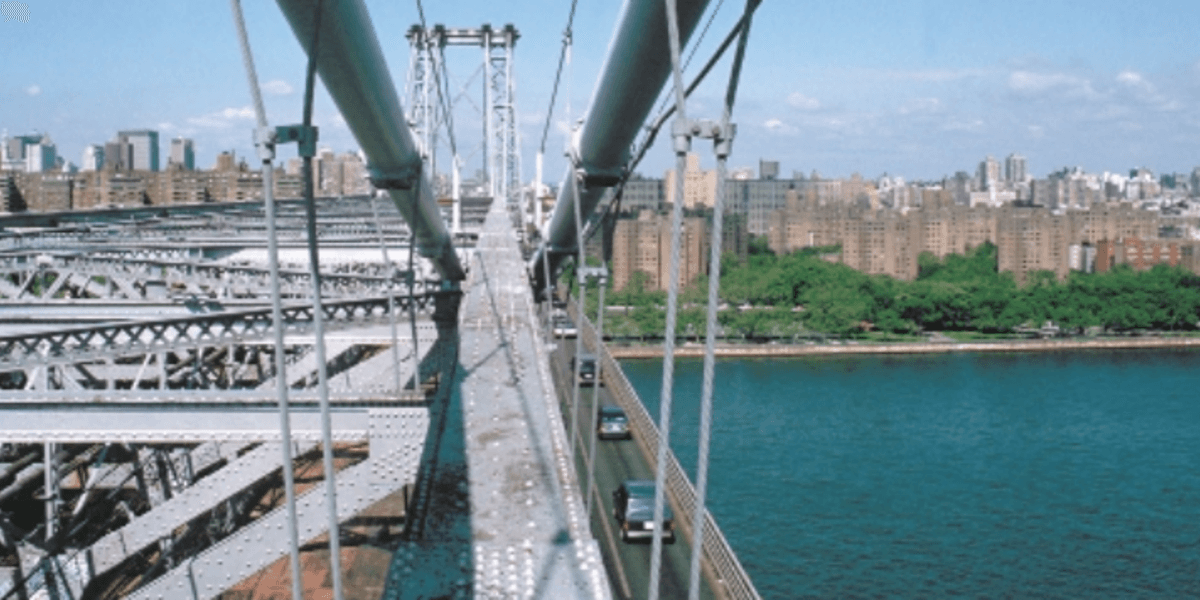
New York: Bridge Load Testing
A monitoring project to investigate in-situ stress-ranges and better characterize the behavior of this complex structural system
New York, New York, USA
October 14, 2011
View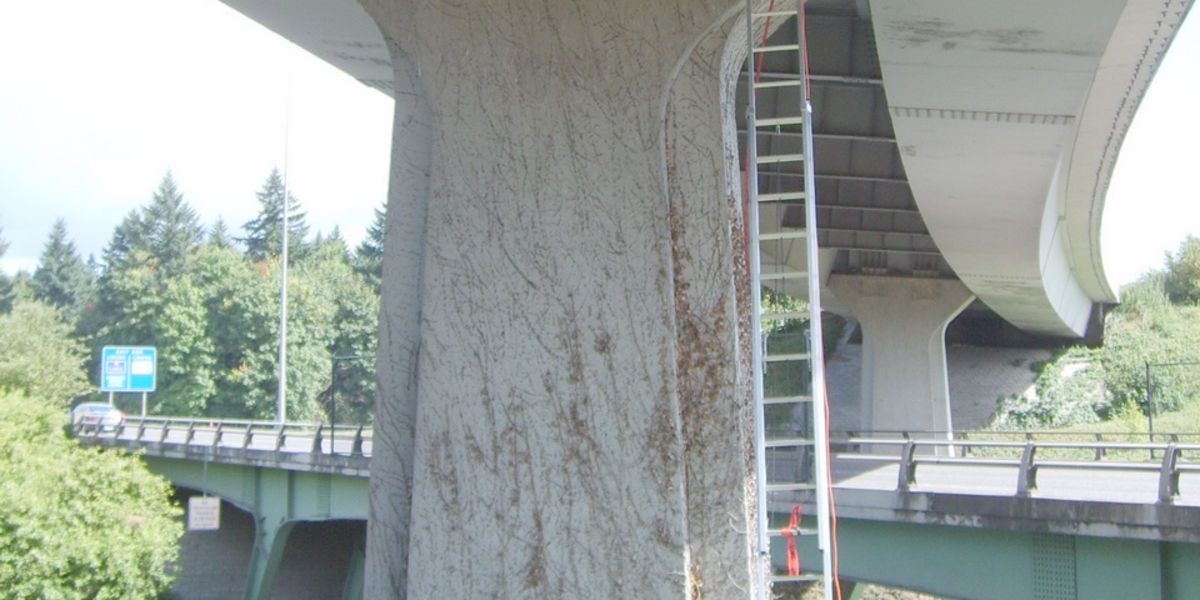
Oregon: Bridge Structural Response
Evaluating bridge performance in response to traffic and temperature changes
Tualatin, Oregon
January 24, 2013
View
Alaska: Hydrokinetic Energy
Monitoring tests of hydrokinetic turbine for use in rivers
Maryland, USA; Alaska, USA
January 27, 2015
View
Showing 4 of 6 results
See all Case StudiesDocuments
- Brochure
RTDAQ Real-Time Data Acquisition Software
November 2017
View Document - Manual
CR9000X Measurement and Control System
February 2016
View Document - Brochure
CR9000X(C) Specifications
View Document - Brochure
CR9000X and CR9000XC Measurement and Control System
September 2006
View Document
Showing 4 of 11 results
See all DocumentsDownloads
- Software ApplicationsPC9000 Patchv5.3.1
March 2, 2007
RETIRED PRODUCT Upgrade PC9000 version 5.0, 5.1, 5.2 or 5.3 to 5.3.1; no intermediate steps are required. PC9000 5.0, 5.1, 5.2 or 5.3 must be installed on your machine.
- OS and FirmwareCR9000X OSv6
January 1, 1990
Current Operating System, Compiler and CR9000X support files for the CRBasic Editor. Requires the Device Configuration Utility, LoggerNet or RTDAQ to upload. Use of this file will update the datalogger support files for the CRBasic Editor included in LoggerNet and RTDAQ.
Services Available
- Repair
- Yes
- Calibration
- Yes
- Free Support
- No