LI190R-L
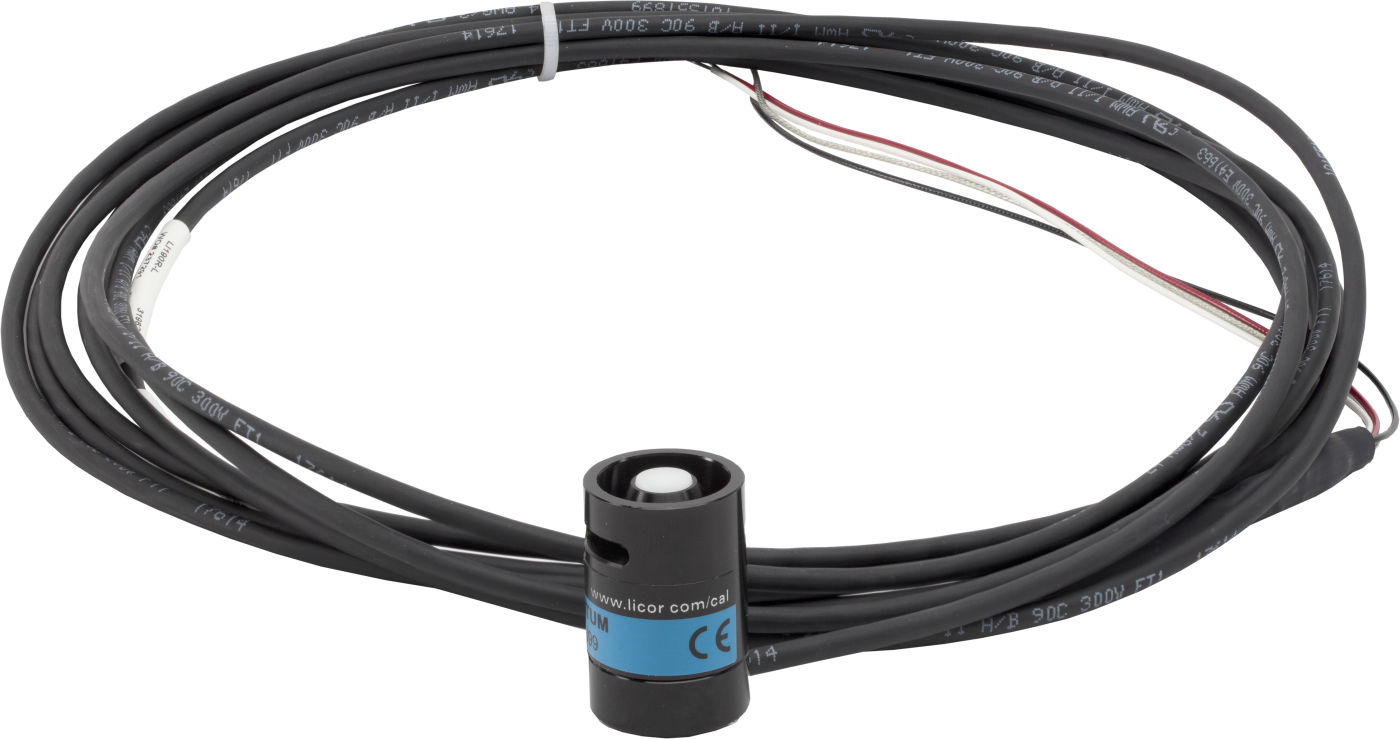
LI190R-L
RetiredQuantum (PAR) Sensor
No longer available to order
This product is retained for service, documentation, and compatibility information.
Replaced by
- CS310
Quantum Sensor
- Model:
- LI190R-L
- Item Number:
- 31982
- Warranty:
- 1 year
Overview
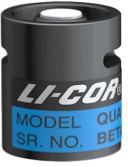
The LI190R Quantum Sensor, manufactured by LI-COR, accurately measures photosynthetic photon flux density (PPFD), which is the number of photons in the 400 to 700 nm waveband incident per unit time on a unit surface. It uses a silicon photovoltaic detector mounted in a cosine-corrected head. A shunt resistor in the sensor’s cable converts the signal from microamps to millivolts, allowing these sensors to be measured directly by a Campbell Scientific data logger.
.
Key Advantages
Compatible with most Campbell Scientific data loggers
Technical Description
The LI190R measures solar radiation with a silicon photovoltaic detector mounted in a cosine-corrected head. A shunt resistor in the sensor’s cable converts the signal from microamps to millivolts, allowing the LI190R to be measured directly by a Campbell Scientific data logger. The LI190R accurately measures Photosynthetic Photon Flux Density (PPFD), which is the number of photons in the 400 to 700 nm waveband incident per unit time on a unit surface. Because PPFD describes photosynthetic activity, the LI190R is ideal for growth chambers and greenhouses.
Product Notes
Benefits
- Ideal for growth chambers and greenhouses
- Measures photosynthetic photon flux density (PPFD) in both natural and artificial light
- Compatible with the CWS900-series interfaces, allowing it to be used in a wireless sensor network
Specifications
- Sensor
- Silicon photovoltaic detector mounted in a cosine-corrected head
- Measurement Description
- Measures photosynthetic photon flux density (PPFD) in both natural and artificial light
- Spectral Range
- 400 to 700 nm
- Calibration
- ±5% traceable to the U.S. National Institute of Standards Technology
(NIST)
- Sensitivity
- Typically 5 to 10 μA per 1000 μmoles s-1 m-2
- Linearity
- Maximum deviation of 1%
(up to 10,000 μmole s-1 m-2)
- Shunt Resistor
- 604 Ω, 0.1%, 25 ppm
- Long-Term Stability
- < ±2% change over a 1 year period
- Response Time
- < 1 μs
- Temperature Dependence
- 0.15% per °C
(maximum)
- Cosine Correction
- Cosine corrected up to 82° angle of incidence
- Operating Temperature Range
- -40° to +65°C
- Relative Humidity Range
- 0 to 100%
(non-condensing)
- Detector Description
- High-stability silicon photovoltaic
(blue enhanced)
- Sensor Housing Description
- Weatherproof anodized aluminum case with acrylic diffuser and stainless-steel hardware; O-ring seal on the removable base and cable assembly
- Diameter
- 2.36 cm
(0.93 in.)
- Height
- 3.63 cm
(1.43 in.)
- Weight
- 84 g
(2.96 oz)
Common Accessories
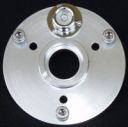
(3)LI2003S
Pyranometer Base and Leveling Fixture
The LI2003S, manufactured by LI-COR, is required to attach an LI200X pyranometer or LI190R quantum sensor to our CM225 solar sensor mounting stand, 015ARM mounting arm, or 025STAND crossarm stand.
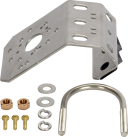
OrderableCM225
Solar Sensor Mounting Stand
The CM225 attaches one pyranometer or quantum sensor to a mast, crossarm, or pole (1.0 to 2.1 in. OD). Many pyranometers and quantum sensors also require a leveling base that secures the sensor to the CM225 as well as level the sensor.
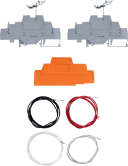
Orderable39115
DIN Rail Terminal Kit with 2 Terminals and 4 Wires
The 39115 provides the needed DIN rail terminals, separator, and wires to connect any product to a data logger or other peripheral that requires four wires for connection. This kit provides the following wires: black, red, white, and clear. The color-coding of these wires matches the wire coloring of the product for ease in connection, maintenance, and troubleshooting.
Orderable
Compatibility
Mounts
To ensure accurate measurements, the sensor should be leveled using an LI2003S leveling fixture, which incorporates a bubble level and three adjusting screws. The LI2003S leveling fixture mounts to a tripod using the 015ARM or to a crossarm using the CM225 mount. These sensors should be mounted away from all obstructions and reflective surfaces that might adversely affect the measurement.
Data Logger Considerations
The LI190R-L requires one differential analog input channel per probe.