RF401
Overview
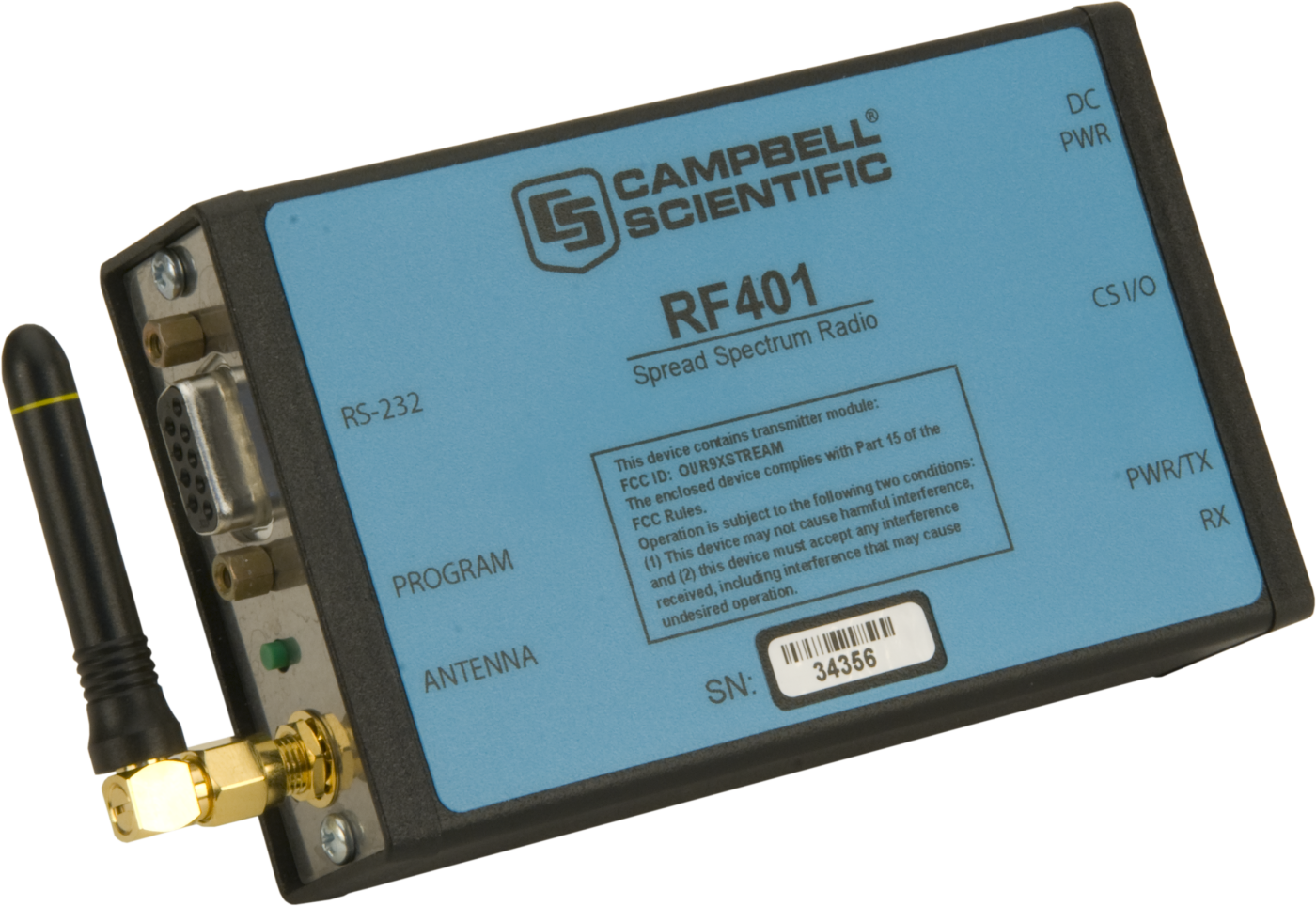
The RF401 has a 910 to 918 MHz operating frequency range, which is used in the US and Canada. This 100 mW spread-spectrum radio can transmit data to another RF401 radio, an RF430 radio, a CR206(X) datalogger, or an AVW206 vibrating-wire interface.
The RF401 supports point-to-point and point-to-multipoint communications. It can serve as a field modem/radio while connected to the data logger or as a base station modem/radio while connected to a computer. The radio can also serve as a stand-alone RF router/repeater.
Technical Description
The RF401 reduces susceptibility to RF interference from other spread spectrum devices by providing user-selectable frequency hopping patterns. Spread spectrum radios spread the normally narrowband information signal over a relatively wide band of frequencies. This process allows communications to be more immune to noise and interference from RF sources such as pagers and cellular phones.
Benefits
- Rugged, low-cost transceivers
- Can be used in the field as a transceiver or in the office as the base station
- Individual FCC license not required
- Transmits up to one mile with omnidirectional antenna; up to 10 miles with higher gain directional antennas at ideal conditions
- Settings stored in non-volatile memory
- Frequency-hops over 25 channels avoids interference from other spread spectrum radios
- Optional extended temperature testing
- Faster communication due to elimination of some small "link state packets"
- Ability to have stand-alone RF router/repeaters (up to 8 repeaters)
- Greater immunity to interference and RF collisions by using RF retries
- Reduced power consumption by the data logger, as the radios perform "packet address filtering"
- Designed for use in PakBus networks
- Built-in setup menus allow access to advanced functionality
Specifications
- Operating Frequency
- 910 to 918 MHz
- Type
- Frequency Hopping Spread Spectrum (FHSS) Transceiver
- RS-232 Baud Rate
- 38.4K, 19.2K, 9600, 4800, or 1200 bps
- Channel Capacity
- 65,000 Network Identifiers share 25 hop channels.
- Frequency Hopping Patterns
- Six different selectable patterns
- Frequency Control
- Direct FM
- Receiver Sensitivity
- -110 dBm at 10-4 bit error rate
(Campbell Scientific protocols will issue retries wherever a bit error occurs.)
- Interference Rejection
- 70 dB at pager and cellular phone frequencies
- Transmitter Power Output
- 100 mW
(nominal)
- Antenna Connector
- Reverse polarity SMA
- FCC ID
- OUR9XTREAM
- Power
- 9 to 16 Vdc
- LEDs
- Power on, TX, RX, diagnostics
- RS-232 Connector
- 9-pin “D” female
(4 wire: Tx, Rx, CTS, GND)
- CS I/O Connector
- 9-pin “D” male
Newer data loggers supply power to the RF401 radio on this connector. Data loggers purchased before December 1997 require the pn 14291 Field Power Cable. - Power Connector
- Barrel plug, center positive 12 V
(used to connect the 14291 Field Power Cable)
- Standard Operating Temperature Range
- -25° to +50°C
- Extended Operating Temperature Range
- -55° to +85°C
The push button that allows you to check/edit programmable settings while the radio is connected to a computer may not operate at temperatures colder than -25°C. - Dimensions
- 11.4 x 7.0 x 2.9 cm
(4.9 x 2.8 x 1.2 in.)
- Weight
- 227 g
(8 oz)
Average Current Drain
- Standby
- < 1 mA
(power-saving options used)
- Receiving
- 24 mA
- Transmitting
- < 75 mA
Accessories
(14)15966
Wall Charger with Barrel Plug
Orderable14291
Field Power Cable, 12 Vdc Plug to Pigtail
Orderable14201
900 MHz 9 dBd Yagi Antenna with Mounting Hardware
Orderable14221
900 MHz 3 dBd Omnidirectional Antenna with Mounting Hardware
Orderable14204
900 MHz 0 dBd 1/2 Wave Omnidirectional Antenna with RPSMA Connector
Orderable15731
900 MHz 0 dBd 1/4 Wave Omnidirectional Antenna with RPSMA Connector
Limited availability15730
900 MHz 0 dBd 1/4 Wave Omnidirectional Antenna with RPSMA Connector
Limited availability15970
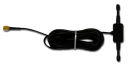
900 MHz 1 dBd Omnidirectional Dipole Antenna with Adhesive Mount
OrderableCOAXRPSMA
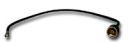
LMR195 Antenna Cable with Reverse Polarity SMA and Type N Pin (Male) Connector
OrderableCOAXNTN
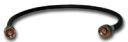
RG8 Antenna Cable with 2 Type N Pin (Male) Connectors
Orderable21212
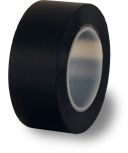
Black Cold Shrink Tape
Orderable18663
Null Modem Cable, 9-Pin PIn (Male) to 9-Pin Pin (Male)
Orderable31314
Surge Protection Kit, Type N to RPSMA, 700 to 2700 MHz
Orderable16987
Peripheral Mounting Kit
Orderable
Other Accessories
(13)15966
Wall Charger with Barrel Plug
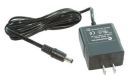
A 15966 wall charger is required for ac power to serve as the power source for the RF401. This ac/dc transformer accepts inputs from 90 to 260 Vac @ 47 to 63 Hz, then outputs 12 Vdc @ 880 mA for use by the RF401. The 15966 is fitted with a cable and barrel plug to connect the transformer to the RF401; cable length is 6 ft.
Orderable14291
Field Power Cable, 12 Vdc Plug to Pigtail
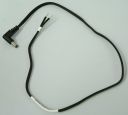
The 14291 power cable allows the RF401 to be powered from a suitable 12 Vdc battery.
Orderable14201
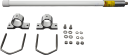
900 MHz 9 dBd Yagi Antenna with Mounting Hardware
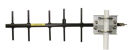
The 14201 is a high-gain (9 dBd), directional (Yagi) antenna suitable for outdoor use. It has a narrow beam width, so precise aiming is mandatory. The 14201 is useful for longer distances and when communicating only with one other station (due to narrow beam width). The antenna has a Type N Female connector and requires an antenna cable to connect it to the radio.
Orderable14221
900 MHz 3 dBd Omnidirectional Antenna with Mounting Hardware
The 14221 has the highest gain (3 dBd) of our omnidirectional antennas. It is suitable for base station use where you need to communicate with multiple stations located in different directions. It's rugged FM2 antenna mounts will accommodate a vertical pipe of up to 2.5" (6.5 cm) outside diameter. The antenna has a Type N Female connector and requires an antenna cable to connect it to the radio.
Orderable14204
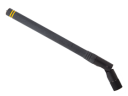
900 MHz 0 dBd 1/2 Wave Omnidirectional Antenna with RPSMA Connector
The 14204 is a unity gain (0 dBd) omnidirectional antenna. This antenna must reside inside a building or enclosure. It's right angle knuckle joint can be oriented vertically or at right angles. The 14204 attaches directly to the RF401 (antenna cable not required).
Orderable15731
900 MHz 0 dBd 1/4 Wave Omnidirectional Antenna with RPSMA Connector
The 15731 is a unity gain (0 dBd), straight, omnidirectional antenna that attaches directly to the RF401 (antenna cable not required). This antenna must reside inside of a building or enclosure.
Limited availability15730
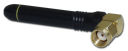
900 MHz 0 dBd 1/4 Wave Omnidirectional Antenna with RPSMA Connector
The 15730 is a unity gain (0 dBd), right angle, omnidirectional antenna that attaches directly to the RF401 (antenna cable not required). This antenna must reside inside of a building or enclosure.
Limited availability15970
900 MHz 1 dBd Omnidirectional Dipole Antenna with Adhesive Mount
The 15970 is an omnidirectional antenna with a 1 dBd gain. It includes adhesive backing that adheres the antenna to a wall, rear-view mirror, window, or another suitable flat, non-conductive surface. A 79 in. cable is provided for attaching the antenna to the RF401. The 15930 must reside inside of a building or enclosure.
OrderableCOAXRPSMA
LMR195 Antenna Cable with Reverse Polarity SMA and Type N Pin (Male) Connector
Either this cable or the COAXNTN (see below) is required when using the 14201 or 14221 antennas. The COAXRPSMA is an LMR 195 cable that terminates in a Type N pin (male) connector on the "antenna end" and a Reverse Polarity SMA (RPSMA) pin (male) connector on the "transceiver end." It is recommended for applications where the cable length is less than 10 feet.
OrderableCOAXNTN
RG8 Antenna Cable with 2 Type N Pin (Male) Connectors
Either this cable or the COAXRPSMA (see above) is required when using the 14201 or 14221 antennas. The COAXNTN is a low-loss RG8 coaxial cable that requires the 14462 surge suppressor to connect it to the RF401. The COAXNTN/14462 combination is recommended over the COAXRPSMA when the antenna cable is longer than 10 feet (as measured between the transceiver and the antenna) or when the RF401 is used in an environment susceptible to lightning or electrostatic buildup.
Orderable21212
Black Cold Shrink Tape
This 10 ft (3.1 m) roll of 1"-wide black self-vulcanizing tape can help protect the connection of outdoor antennas. After connecting the coaxial cable to the antenna, wrap the tape around the connectors that are exposed to the environment.
Orderable18663
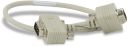
Null Modem Cable, 9-Pin PIn (Male) to 9-Pin Pin (Male)
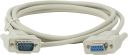
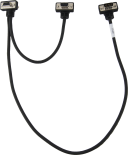
The 18663 is a 9-pin to 9-pin null modem cable used to connect the RF401 radio to the datalogger's RS-232 port.
Orderable31314
Surge Protection Kit, Type N to RPSMA, 700 to 2700 MHz
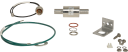
The 31314 is an RF surge protection kit with flange mounting bracket. It may be flange-mounted to an enclosure backplate or bulkhead-mounted through an enclosure wall. One side of the surge protector connects to a radio with an RPSMA antenna connection. The other side connects to an antenna/antenna coaxial cable with Type N connector.
Orderable
Services
(2)21107
900 MHz Radio Test Kit Rental for 5 Business Days
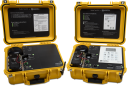
The 21107 provides a two week rental of a 900 MHz spread spectrum demo kit that allows customers to test the 900 MHz spread spectrum radio incorporated in the RF401. The kit includes two CR206X dataloggers; each CR206X datalogger has an internal RF401 radio. With this kit, customers can ensure that the spread spectrum radio will work in their system's environment, and can also determine the best antenna options for their system. An applications engineer must be connected with each order containing this demo kit. The applications engineer needs to ensure that all of the equipment is returned within the allotted two-week time period.
Orderable21109
5 Additional Days of Usage of Radio Test Kit
The time period of the demo kit's rental starts when Campbell Scientific ships the kit and ends when Campbell Scientific receives the kit. Each week, or a portion thereof, past the original two week rental will be charged this amount.
Orderable
An applications engineer must be connected with each order containing the demo kit.
Similar Products
(1)
Compatibility
Communications
Internal Radio of CR206(X) Dataloggers
The RF401 spread spectrum radio can communicate with the internal spread spectrum radio of our CR206(X) dataloggers. Certain RF401 settings must match the CR206(X) settings for communications between the radio and data logger to be successful. The factory default settings of these devices may not match; therefore, they may need to be reconfigured before communications can take place. For more information, refer to the Quick Reference Guide for Setting Up RF401-to-CR206 Communication application note.
Other Spread-Spectrum Radios
The RF401 can be used in networks containing RF430 and RF400 radios. When RF401 radios are used in networks containing RF400 radios, the Protocol must be set to Transparent. Also, if RF400 and RF401 radios will be in the same RF proximity, do not use 28, 44, 52, 56, or 60 for the RF400 Net Address. RF400 radios with Net Addresses of 28, 44, 52, and 56 interfere with RF401 radios with Net Addresses of 0, 1, 2, and 3, respectively. The RF400 Net Address of 60 interferes with all RF401 Net Addresses.
Campbell Scientific does not recommend using the RF401 in networks containing FGR-115 or RF450 radios.
Transparent and PakBus Protocols
Do not mix RF401 radios set to the Transparent protocol with RF401 or RF430 radios set to either of the PakBus protocols, since this will produce RF traffic without any RF communications. However radios with the PakBus Aware and PakBus Node settings can coexist in the same network (i.e., some radios set to PakBus Aware and some radios set to PakBus Node).
Enclosure Considerations
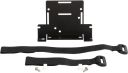
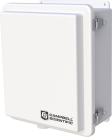
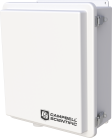
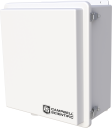
A desiccated, non-condensing environment is required. The 14162 Mounting Kit includes hardware for securing the RF401 to an enclosure backplate (see Ordering Info).
Compatible Products
(6)ENC10/12
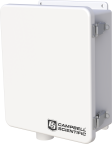
Weather-Resistant Enclosure, 10 x 12 inches
OrderableNotes—ENC10/12R
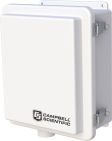
Raised Lid Enclosure, 10 x 12 inches
OrderableNotes—ENC12/14
Weather-Resistant Enclosure, 12 x 14 inches
OrderableNotes—ENC14/16
Weather-Resistant Enclosure, 14 x 16 inches
OrderableNotes—ENC16/18
Weather-Resistant Enclosure, 16 x 18 inches
OrderableNotes—CR6
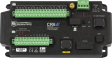
High-Capacity Data Acquisition System
OrderableNotes—
Related Resources
Case Studies

Utah: Monitoring Strain on Precast Bridge Deck
Monitoring strain on bridge deck
Beaver Creek Bridge on US 6 near Price, Utah
February 27, 2014
View
Delaware: Urgent Action on Bridge
Bridge monitoring
Wilmington, Delaware
March 12, 2018
View
Pennsylvania: Monitoring Landfills
Landfill monitoring and system control
Pennsylvania
March 31, 2011
View
Louisiana: Sinkhole Monitoring
Early warning of catastrophic ground movement
Bayou Corne, Louisiana, USA
November 12, 2018
View
Showing 4 of 7 results
See all Case StudiesDocuments
Downloads
Services Available
- Repair
- No
- Calibration
- No
- Free Support
- No