922-MHz Spread-Spectrum Radio
Overview
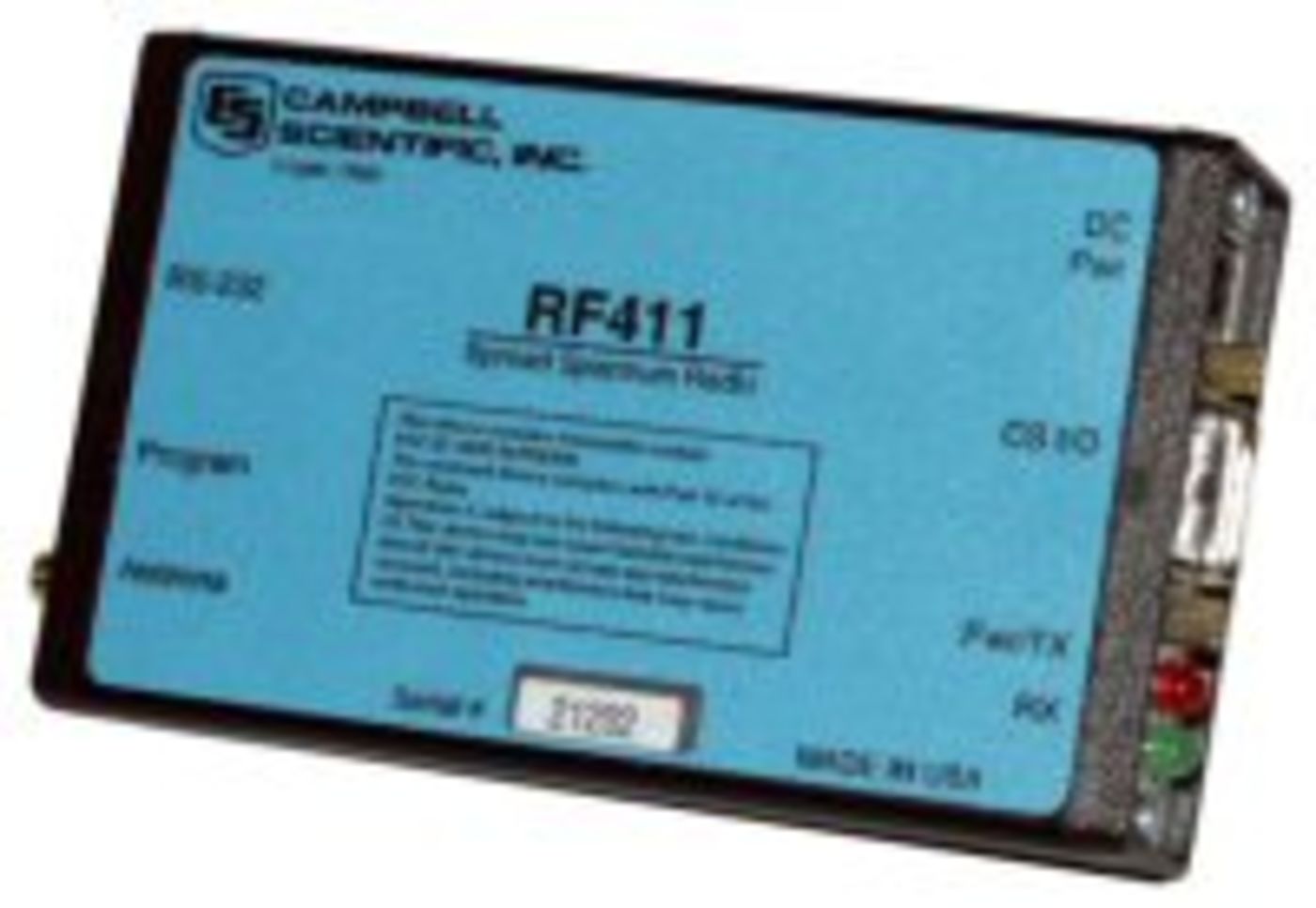
The RF411 has a 920 to 928 MHz frequency range, which is used in Australia and Israel. This 100 mW spread-spectrum radio can transmit data to another RF411 radio, an RF431 radio, a CR211(X) datalogger, or an AVW211 interface.
The RF411 supports point-to-point and point-to-multipoint communications. It can serve as a field modem/radio while connected to the data logger or as a base station modem/radio while connected to a computer. The radio can also serve as a stand-alone RF router/repeater.
Technical Description
The RF411 reduces susceptibility to RF interference from other spread spectrum devices by providing user-selectable frequency hopping patterns. Spread spectrum radios spread the normally narrowband information signal over a relatively wide band of frequencies. This process allows communications to be more immune to noise and interference from RF sources such as pagers and cellular phones.
Benefits
- Rugged, low-cost transceivers
- Can be used in the field as a transceiver or in the office as the base station
- Transmits up to one mile with omnidirectional antenna; up to 10 miles with higher gain directional antennas at ideal conditions
- Settings stored in non-volatile memory
- RS-232 port for connecting to a computer; CS I/O port for connecting to a data logger
- Frequency-hops over 25 channels avoids interference from other spread-spectrum radios
- Optional extended temperature testing
- Faster communication due to elimination of some small "link state packets"
- Ability to have stand-alone RF router/repeaters (up to 8 repeaters)
- Greater immunity to interference and RF collisions by using RF retries
- Reduced power consumption by the data logger, as the radios perform "packet address filtering"
- Built-in setup menus allow access to advanced functionality
- Designed for use in PakBus networks
Specifications
- Operating Frequency
- 920 to 928 MHz
- Type
- Frequency Hopping Spread Spectrum (FHSS) Transceiver
- RS-232 Data Rate
- 38.4k, 19.2k, 9600, 4800, or 1200 bps
- Channel Capacity
- 65,000 Network Identifiers share 25 hop channels.
- Frequency Hopping Patterns
- Six different selectable patterns
- Receiver Sensitivity
- -110 dBm at 10-4 bit error rate
(Campbell Scientific protocols will issue retries wherever a bit error occurs.)
- Interference Rejection
- 70 dB at pager and cellular phone frequencies
- Transmitter Power Output
- 100 mW
(nominal)
- Antenna Connector
- Reverse polarity SMA
- FCC ID
- OUR9XTREAM
- Power
- 9 to 16 Vdc
- LEDs
- Power on, TX, RX, diagnostics
- RS-232 Connector
- 9-pin “D” female
(4 wire: Tx, Rx, CTS, GND)
- CS I/O Connector
- 9-pin “D” male
Newer dataloggers supply power to the RF411 radio on this connector. Dataloggers purchased before December 1997 require the pn 14291 Field Power Cable. - Power Connector
- Barrel plug, center positive 12 V
(used to connect the 14291 Field Power Cable)
- Maximum Nodes in Network
- 50
- Standard Operating Temperature Range
- -25° to +50°C
- Extended Operating Temperature Range
- -55° to +85°C
The push button that allows you to check/edit programmable settings while the radio is connected to a computer may not operate at temperatures colder than -25°C. - Dimensions
- 11.4 x 7.0 x 2.9 cm
(4.9 x 2.8 x 1.2 in.)
- Weight
- 227 g
(8 oz)
Average Current Drain
- Standby
- < 1 mA
(power-saving options used)
- Receiving
- 24 mA
- Transmitting
- < 75 mA
Other Accessories
(12)
15966
Wall Charger with Barrel Plug
A 15966 wall charger is required for ac power to serve as the power source for the RF411.
Orderable
14291
Field Power Cable, 12 Vdc Plug to Pigtail
The 14291 power cable allows the RF411 to be powered from a suitable 12 Vdc battery.
Orderable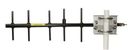
14201
900 MHz 9 dBd Yagi Antenna with Mounting Hardware
The RF411 requires the purchase of an antenna. Six antennas are offered. The 14201 is a high-gain (9 dBd), directional (Yagi) antenna suitable for outdoor use. It has a narrow beam width, so precise aiming is mandatory. The 14201 is useful for longer distances and when communicating only with one other station (due to narrow beam width). The antenna has a Type N Female connector and requires an antenna cable to connect it to the radio.
Orderable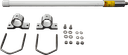
14221
900 MHz 3 dBd Omnidirectional Antenna with Mounting Hardware
The RF411 requires the purchase of an antenna. Six antennas are offered. The 14221 has the highest gain (3 dBd) of our omnidirectional antennas. It is suitable for base station use where you need to communicate with multiple stations located in different directions. It's rugged FM2 antenna mounts will accommodate a vertical pipe of up to 2.5" (6.5 cm) outside diameter. The antenna has a Type N Female connector and requires an antenna cable to connect it to the radio.
Orderable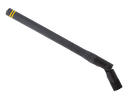
14204
900 MHz 0 dBd 1/2 Wave Omnidirectional Antenna with RPSMA Connector
The RF411 requires the purchase of an antenna. Six antennas are offered. The 14204 is a unity gain (0 dBd) omnidirectional antenna. This antenna must reside inside a building or enclosure. It's right angle knuckle joint can be oriented vertically or at right angles. The 14204 attaches directly to the RF411 (antenna cable not required).
Orderable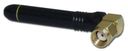
15730
900 MHz 0 dBd 1/4 Wave Omnidirectional Antenna with RPSMA Connector
The RF411 requires the purchase of an antenna. Six antennas are offered. The 15730 is a unity gain (0 dBd), right angle, omnidirectional antenna that attaches directly to the RF411 (antenna cable not required). This antenna must reside inside of a building or enclosure.
Orderable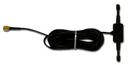
15970
900 MHz 1 dBd Omnidirectional Dipole Antenna with Adhesive Mount
The RF411 requires the purchase of an antenna. Six antennas are offered. The 15970 is an omnidirectional antenna with a 1 dBd gain. It includes adhesive backing that adheres the antenna to a wall, rear-view mirror, window, or another suitable flat, non-conductive surface. A 79 in. cable is provided for attaching the antenna to the RF411. The 15930 must reside inside of a building or enclosure.
Orderable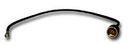
COAXRPSMA
LMR195 Antenna Cable with Reverse Polarity SMA and Type N Pin (Male) Connector
Either this cable or the COAXNTN (see below) is required when using the 14201 or 14221 antennas. The COAXRPSMA is an LMR 195 cable that terminates in a Type N pin (male) connector on the "antenna end" and a Reverse Polarity SMA (RPSMA) pin (male) connector on the "transceiver end." It is recommended for applications where the cable length is less than 10 feet.
Orderable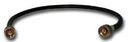
COAXNTN
RG8 Antenna Cable with 2 Type N Pin (Male) Connectors
Either this cable or the COAXRPSMA (see above) is required when using the 14201 or 14221 antennas. The COAXNTN is a low-loss RG8 coaxial cable that requires the 14462 surge suppressor to connect it to the RF411. The COAXNTN/14462 combination is recommended over the COAXRPSMA when the antenna cable is longer than 10 feet (as measured between the transceiver and the antenna) or when the RF411 is used in an environment susceptible to lightning or electrostatic buildup.
Orderable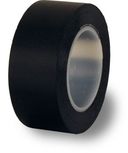
21212
Black Cold Shrink Tape
This 10 ft (3.1 m) roll of 1"-wide black self-vulcanizing tape can help protect the connection of outdoor antennas. After connecting the coaxial cable to the antenna, wrap the tape around the connectors that are exposed to the environment.
Orderable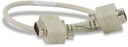
18663
Null Modem Cable, 9-Pin PIn (Male) to 9-Pin Pin (Male)
The 18663 is a 9-pin to 9-pin null modem cable used to connect the RF411 radio to the datalogger's RS-232 port.
Orderable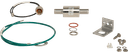
31314
Surge Protection Kit, Type N to RPSMA, 700 to 2700 MHz
The 31314 is an RF surge protection kit with flange mounting bracket. It may be flange-mounted to an enclosure backplate or bulkhead-mounted through an enclosure wall. One side of the surge protector connects to a radio with an RPSMA antenna connection. The other side connects to an antenna/antenna coaxial cable with Type N connector.
Orderable
Replacement Parts
(2)
14197
LMR195 Shielded Polyethylene Low-Loss Coaxial Cable
This shielded low loss cable is a component in the COAXRPSMA-L. The 14197 does not include connectors. The price listed is per foot.
Orderable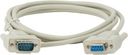
10873
Serial Data Cable, 9-Pin Socket (Female) to 9-Pin Pin (Male)
The 10873 is a serial cable that is useful for connecting the RS-232 port of the datalogger to the 9-pin RS-232 port of a computer. The cable is six feet long.
Orderable
Compatibility
Note: The following shows notable compatibility information. It is not a comprehensive list of all compatible or incompatible products.
Communications
Internal Radio of CR211(X) Dataloggers
The RF411 spread spectrum radio can communicate with the internal spread spectrum radio of our CR211(X) dataloggers. Certain RF411 settings must match the CR211(X) settings for communications between the radio and data logger to be successful. The factory default settings of these devices may not match; therefore, they may need to be reconfigured before communications can take place. For more information, refer to the Quick Reference Guide for Setting Up RF401-to-CR206 Communication application note (see Documents).
Other Spread-Spectrum Radios
The RF411 radios can be used in networks containing RF431 and RF410 radios. When RF411 radios are used in networks containing RF400 radios, the Protocol must be set to Transparent. Also, if RF410 and RF411 radios will be in the same RF proximity, do not use 28, 44, 52, 56, or 60 for the RF410 Net Address. RF410 radios with Net Addresses of 28, 44, 52, and 56 interfere with RF411 radios with Net Addresses of 0, 1, 2, and 3, respectively. The RF410 Net Address of 60 interferes with all RF411 Net Addresses.
Campbell Scientific does not recommend using the RF411 in networks containing FGR-115 or RF450 radios.
Transparent and PakBus Protocols
Do not mix RF411 radios set to the Transparent protocol with RF411 or RF431 radios set to either of the PakBus protocols, since this will produce RF traffic without any RF communications. However radios with the PakBus Aware and PakBus Node settings can coexist in the same network (i.e., some radios set to PakBus Aware and some radios set to PakBus Node).
Enclosure Considerations
A desiccated, non-condensing environment is required. The 14162 Mounting Kit includes hardware for securing the RF411 to an enclosure backplate (see Ordering Info).
Compatible Products
(26)
Basic Datalogger
Basic Datalogger
RetiredNotes—
Basic Datalogger
Basic Datalogger
RetiredNotes—
CR6
High-Capacity Data Acquisition System
OrderableNotes—
CR10
Measurement and Control System
RetiredNotes—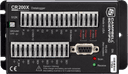
CR200X
Datalogger
RetiredNotes—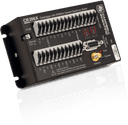
CR206X
Datalogger with 900 MHz Spread-Spectrum Radio
RetiredNotes—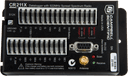
CR211X
Datalogger with 922 MHz Spread-Spectrum Radio
End of lifeNotes—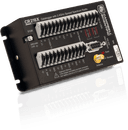
CR216X
Datalogger with 2.4 GHz Spread-Spectrum Radio
RetiredNotes—
CR295X
Datalogger for GOES Satellite Communication
RetiredNotes—
CR300
Measurement and Control Datalogger
RetiredNotes—
CR800
Measurement and Control Datalogger
RetiredNotes—
CR850
Measurement and Control Datalogger
RetiredNotes—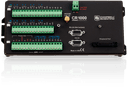
CR1000
Measurement and Control Datalogger
RetiredNotes—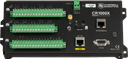
CR1000X
Measurement and Control Datalogger
RetiredNotes—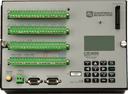
CR3000
Measurement and Control Datalogger
RetiredNotes—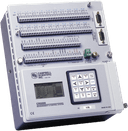
CR5000
Measurement and Control Datalogger
RetiredNotes—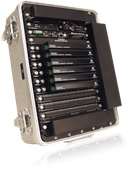
CR9000X
Measurement and Control Datalogger
RetiredNotesAlthough the CR9000 and CR9000X are compatible, RF411 radios do not support their fastest communication rates, and are therefore not practical for many CR9000(X) applications.
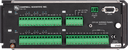
Datalogger for Measurement and Control
Datalogger for Measurement and Control
RetiredNotes—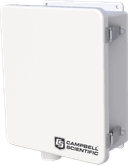
ENC10/12
Weather-Resistant Enclosure, 10 x 12 inches
OrderableNotes—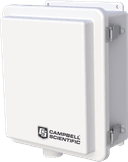
ENC10/12R
Raised Lid Enclosure, 10 x 12 inches
OrderableNotes—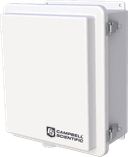
ENC12/14
Weather-Resistant Enclosure, 12 x 14 inches
OrderableNotes—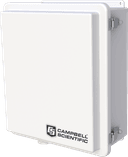
ENC14/16
Weather-Resistant Enclosure, 14 x 16 inches
OrderableNotes—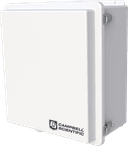
ENC16/18
Weather-Resistant Enclosure, 16 x 18 inches
OrderableNotes—
Measurement and Control System
Measurement and Control System
RetiredNotesAlthough the CR9000 and CR9000X are compatible, RF411 radios do not support their fastest communication rates, and are therefore not practical for many CR9000(X) applications.
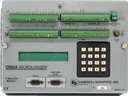
Micrologger for Data Acquisition
Micrologger for Data Acquisition
RetiredNotes—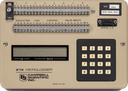
Micrologger®
Micrologger®
RetiredNotes—
Related Resources
Documents
Downloads
Videos and Tutorials

Product Life Events
- Available for Order
- April 23, 2005
- Calibration Available Until
- March 28, 2014
- Retired
- March 28, 2014
- Free Support Until
- March 31, 2024
- End of Life
- March 31, 2024
- Repair Available Until
- March 31, 2024